

No, you cannot do literally everything in one 30-day playthrough of The Blood of Dawnwalker. Conflicting choices, missed quests and multiple endings make that impossible. The Blood of Dawnwalker time limit is not a real-time countdown, however. It advances only when marked actions spend part of Coen’s schedule.
Creative director Mateusz Tomaszkiewicz has said players should be able to complete the majority of the game before time runs out. You can take your time between costly actions, but you still need to decide which people and storylines deserve a place in Coen’s limited schedule.
What is The Blood of Dawnwalker?
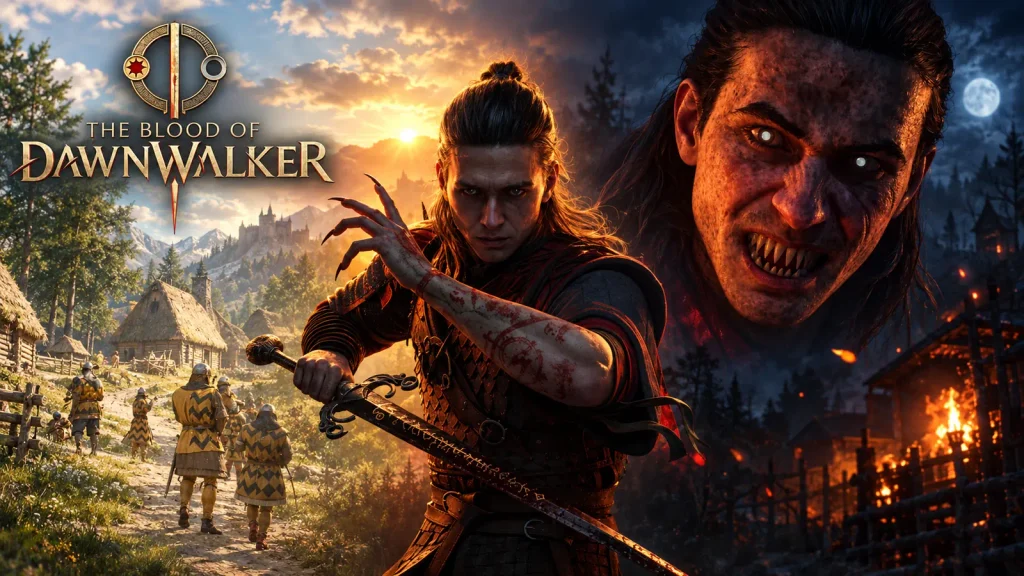
The Blood of Dawnwalker is an open-world dark fantasy action RPG from Rebel Wolves and Bandai Namco Entertainment. It takes place in 14th-century Europe, where war, the Black Death and a vampire takeover have devastated the region. Coen, the protagonist, lives as a human during the day and a vampire at night. His sword, Witchcraft and vampiric powers give each form a different way to fight and explore. The game was released on September 3, 2026 for PC, PlayStation 5 and Xbox Series X|S. Its nonlinear story changes according to the quests you accept, the people you help and the time you choose to spend.
The Day 1 Edition includes the base game, a steelbook and a world map, and it is available on PS5 and Xbox Series X|S.

How the Blood of Dawnwalker time limit works
After the prologue, you receive 30 days and 30 nights to deal with Brencis and rescue Coen’s family. Each daytime period contains eight time segments, followed by eight nighttime segments. The segmented clock in the upper-right corner shows how much of the current phase remains.
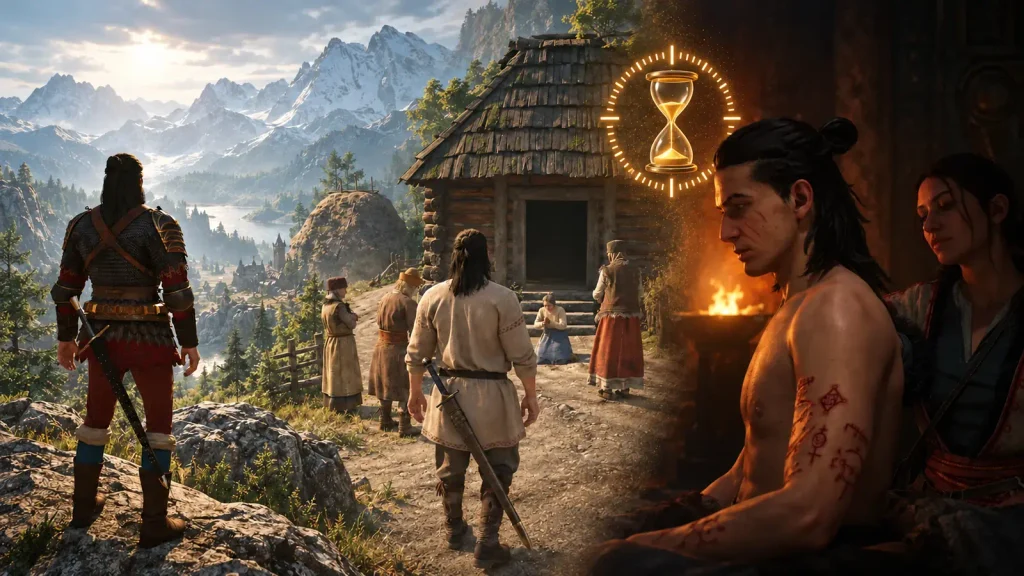
These segments are a resource rather than ordinary hours. Standing still does not waste them, and neither does walking from one end of the map to the other. Instead, the game attaches a cost to actions that meaningfully advance Coen’s story. An interaction marked with an hourglass might consume one segment, while a longer quest step can consume several. Bandai Namco’s official community FAQ confirms that free exploration and combat do not move the clock.
The journal previews the expected cost of a quest, although that cost may be divided across multiple stages rather than charged all at once. If an action will move the game from day to night, its warning also shows the approaching change, so you can finish time-sensitive business before committing.
Rebel Wolves describes time as a currency under the player’s control. The studio explains the system in its official overview of the game’s narrative sandbox.
What consumes time and what remains free?
Check for an hourglass before confirming an action. The game normally warns you before spending time, but a quest’s total cost can be distributed across dialogue, research and other steps.
| Usually consumes time | Usually does not consume time |
|---|---|
| Marked quest stages | General exploration |
| Certain dialogue choices | Travelling across the map |
| Training and many skill upgrades | Ordinary combat encounters |
| Repairing damaged Shrines | Looting chests and gathering items |
| Story-relevant interactions | Managing equipment and inventory |
| Waiting at a Shrine | Scouting an area before committing |
There are exceptions, so treat this table as a planning guide rather than a substitute for the on-screen warning. Entering an important area, speaking to a particular NPC or interacting with a quest object can trigger a time cost even when the journey there was free. A ticking sound and greyed-out sections of the clock warn you when approaching certain automatic transitions.
Waiting at a Shrine spends time without progressing a quest. It is useful when an objective is available only during the opposite phase, although it should not be the first solution. Check whether you still have useful daytime or nighttime objectives before skipping ahead.
Can you complete everything within 30 days?
There is enough time to see most of the game, but not every possible version of its story.
Seeing every narrative branch and ending in one save is impossible. Some choices exclude others, certain quests expire, and some opportunities appear only during the day or at night. The developer’s “majority of the game” wording is not a promise that every compatible quest or collectible will fit into one perfectly planned run.
For a first playthrough, choose the characters, factions and storylines that matter most to your version of Coen instead of trying to preserve every option.
How to manage time without following a rigid schedule
You do not need a day-by-day walkthrough to finish on time. A few consistent decisions are more useful than a route that tells you exactly where to go.
Prioritize quests marked with a blue clock. Post-launch guide testing indicates that these opportunities can expire, so leaving them in the journal carries more risk than postponing an objective with no deadline. A sun or moon icon means the activity is available only during that phase. Grouping several daytime or nighttime objectives together prevents you from wasting segments by repeatedly waiting at Shrines.
Explore before you commit. Reaching a location, fighting enemies and gathering nearby items are generally free, while activating the important quest step may not be. Scouting first lets you identify other objectives in the same area and decide whether the reward is worth the cost.
Be selective with training. Many upgrades consume time as well as their other requirements, which means unlocking every appealing skill immediately can quietly eat into the calendar. Buy abilities that support the way you already fight, then leave situational upgrades until you know you need them.
Do not repair every damaged Shrine on sight. A repair may cost a segment even when another fast-travel point already serves the area.
Keep several manual saves. Create one before a major choice and preserve another from the final few days. The first lets you reverse a decision you regret; the second gives you a shorter route to other conclusions.
How day and night change Coen
Day and night do more than control which quests are available. They change how Coen moves, fights and survives.
During the day, Coen is human and has access to Witchcraft abilities. Most vendors operate during the day, and some activities and characters are available only while the sun is up. At night, his vampiric nature takes over. Vampiric abilities improve his mobility and give him access to options such as supernatural traversal, while other nighttime objectives become available. Bandai Namco’s official skills overview confirms the day-only Witchcraft and night-only Vampirism split.
Healing also changes at night. Human food and potions used during the day are not the answer to every nighttime injury. Vampire Coen depends more heavily on blood, whether it comes from carried resources or enemies. Hunger creates an additional danger: when his health falls critically low at night, dialogue choices can be replaced by an option to give in and attack the person in front of him.
Before crossing sunrise or sunset, check your health, objectives and supplies. Nighttime powers will not help if the NPC or service you need is available only during the day.
For a direct explanation from the development side, this discussion includes a senior quest designer from Rebel Wolves explaining how the timer was built:
What happens when the 30 days expire?
The following section contains consequences for the deadline and ending structure, but no detailed story ending.
Reaching the end of Day 30 does not trigger an instant game over. Bandai Namco confirms that the story continues after the deadline and warns that Coen’s family may suffer the consequences. In post-launch testing, Video Games Chronicle reports that the family dies at Brencis’ ceremony, the family-focused epilogue becomes unavailable, and the player misses the In the Nick of Time trophy or achievement.
Family rescue objectives are no longer available after the deadline, but you can remain in the world and continue clearing eligible side content.
The situation after a successful rescue is less clear because two major post-launch guides currently contradict each other:
| Outcome | Reported continuation state | Confidence |
|---|---|---|
| The 30-day deadline expires | The game continues, but family-related objectives and the family epilogue are lost | Confirmed broadly by Bandai Namco and described in detail by VGC |
| You rescue the family and complete an ending | VGC says there is no regular post-game continuation; GamesRadar says players can keep playing after the main quest | Conflicting reports |
According to Video Games Chronicle’s post-launch testing, completing a successful family rescue does not return you to the open world for ordinary post-game cleanup. GamesRadar’s time-system guide says the opposite without explaining the conditions. Until that conflict is resolved through a patch note or reproducible testing, keep a manual save from before the ending if you want to finish more activities or test another conclusion.
Latest posts:
- 12 best road trip game apps for long car rides in 2026
- Will Modern Warfare 4 have Open Combat Missions?
- Who is Nagato in Ghost of Yōtei?
- Is Onimusha: Way of the Sword like Black Myth: Wukong?
- Can you do everything in Blood of Dawnwalker’s 30 days?
Can you disable or extend the time limit?
At the time of writing, there is no in-game setting that disables the Blood of Dawnwalker time limit. PlayStation 5 and Xbox Series X|S players therefore have no documented way to turn it off.
PC players have access to unofficial mods that can extend the deadline, increase the number of daily segments or remove time costs from some activities. These mods fundamentally change the game’s balance. They may also stop working correctly after an update or create problems that the developer does not support.
Try the standard timer before installing a mod. If the pressure keeps you from enjoying the game, back up your saves before testing any third-party files.