
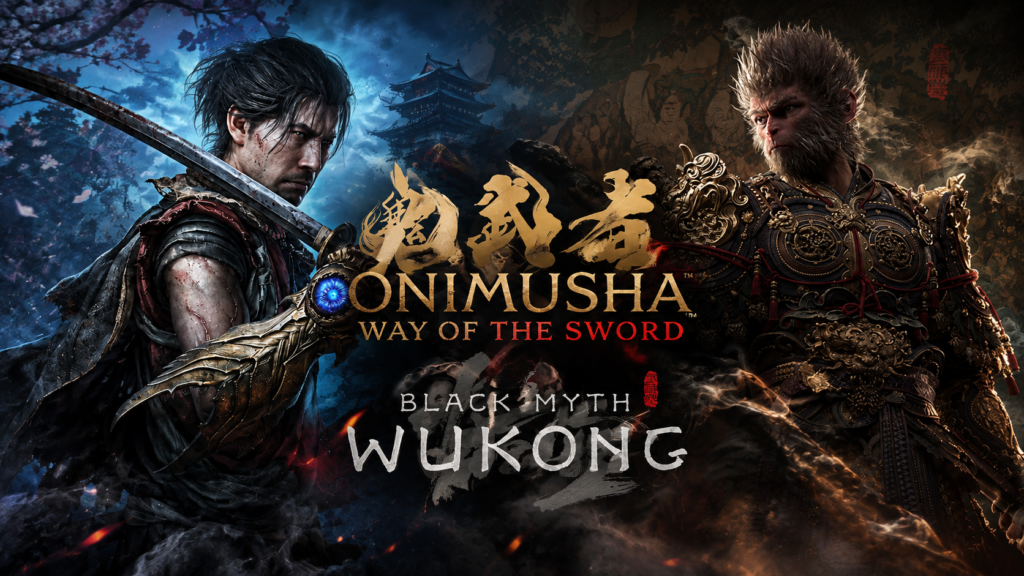
Onimusha: Way of the Sword shares Black Myth: Wukong’s third-person melee combat, mythological enemies and boss-heavy pacing, but the two games play differently. Onimusha is a more focused character action game built around sword defence, Issen counters and the Oni Gauntlet, while Wukong offers broader action-RPG progression through staff stances, spells, transformations, and build customisation.
What is Onimusha: Way of the Sword?
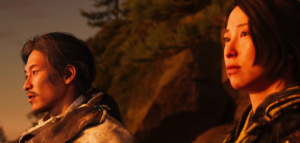
Onimusha: Way of the Sword is a swordplay-focused action game developed and published by Capcom. It follows a fictionalised version of Miyamoto Musashi, visually modelled after legendary Japanese actor Toshiro Mifune, as he battles the supernatural Genma in a dark-fantasy version of Kyoto during the Edo period. Musashi wields the mystical Oni Gauntlet, which allows him to absorb souls and use supernatural powers while fighting Genma enemies.
The game officially launched on September 4, 2026, for PlayStation 5, Xbox Series X|S, Nintendo Switch 2 and PC. Steam lists September 3 in some regions because of the platform’s local release timing.
For more information about the game, you can visit the official Onimusha: Way of the Sword website from Capcom.
Onimusha vs Black Myth: Wukong
If you’re deciding between the two, the biggest difference is not their mythology but how they approach combat and progression. Onimusha puts considerably more emphasis on reading attacks and responding with the sword, while Black Myth: Wukong gives players more combat tools to combine.
| Feature | Onimusha: Way of the Sword | Black Myth: Wukong |
|---|---|---|
| Developer | Capcom | Game Science |
| Setting | Supernatural Edo-period Japan | Mythological China |
| Protagonist | Miyamoto Musashi | The Destined One |
| Combat foundation | Sword defence, parries, deflects and Issen counters | Staff stances, spells, transformations and Spirits |
| Progression | Skills, equipment and Oni Armaments | Skill trees, stances, Spirits, equipment and abilities |
| World structure | Focused stages with an explorable Kyoto hub/open-town area | Chapter-based regions with broader exploration |
| Difficulty options | Story, Action and unlockable Carnage | No conventional difficulty selector |
| Primary weapon | Sword | Staff |
Black Myth: Wukong officially emphasises staff techniques alongside spells, transformations, abilities and equipment combinations, while Onimusha is built around its swordplay system and Musashi’s Oni abilities.
Is Onimusha connected to Black Myth: Wukong?
No. They are completely separate games developed by different studios, with different stories, settings and characters.
Onimusha: Way of the Sword is a Capcom game rooted in Japanese history, supernatural fiction and the long-running Onimusha franchise. Game Science developed Black Myth: Wukong, which draws heavily on Journey to the West and Chinese mythology.
The two games can appear together in search results because they target a similar audience: players interested in visually impressive third-person action games, challenging bosses and Asian-inspired mythology. Their combat systems also share some broad similarities. However, Onimusha is not a sequel, spin-off, crossover, expansion or DLC for Black Myth: Wukong. They are completely separate games from different developers and publishers.
How their combat systems differ
Onimusha rewards precise sword defence
The biggest difference between the two games becomes apparent as soon as you spend time learning Onimusha’s combat system. Rather than simply giving players a large collection of offensive abilities, the game places considerable emphasis on defence and reaction timing. Blocking, parrying, deflecting, dodging and executing an Issen at the right moment are central to dealing with stronger enemies and bosses.
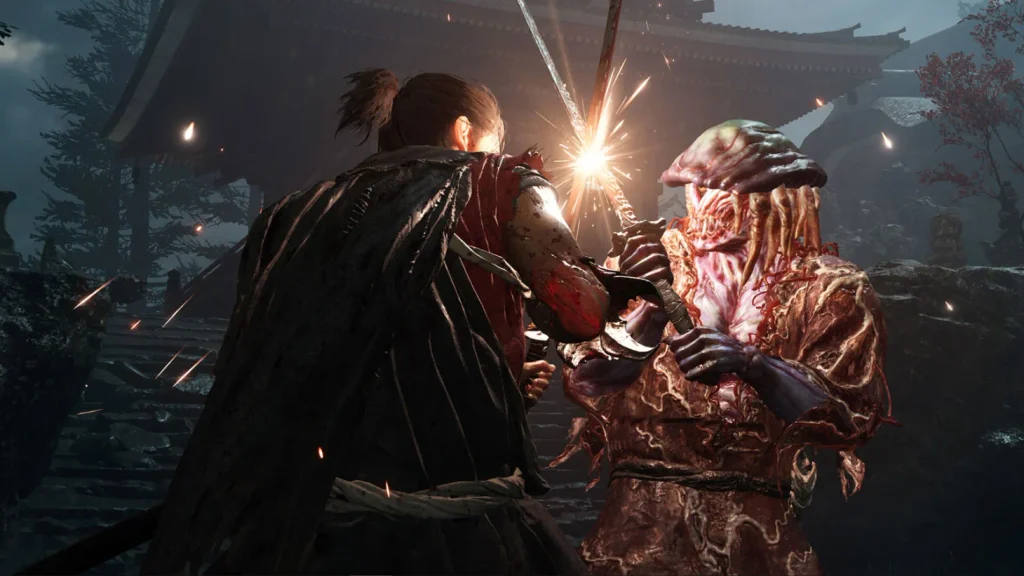
This creates a combat rhythm that often feels closer to a tense sword duel than a conventional hack-and-slash encounter. You watch an enemy’s animation, wait for an opening, defend against an incoming attack and then attempt to punish it with a precisely timed counter. The combat system grows increasingly demanding as enemies and encounters get harder.
The Oni Gauntlet also gives Musashi access to supernatural abilities, while Oni Armaments expand his offensive options. These systems prevent the swordplay from becoming completely one-dimensional, but the sword remains the centre of the experience.
Wukong gives players more build variety
Black Myth: Wukong takes a broader approach. Its combat revolves around the staff, but players can combine different staff stances, spells, Spirits, transformations, abilities and equipment to create different approaches to combat.
That means players have more freedom to change how their character functions during different encounters. A fight can involve switching between aggressive staff attacks, defensive movement, spells such as Immobilise, Spirit abilities or temporary transformations.
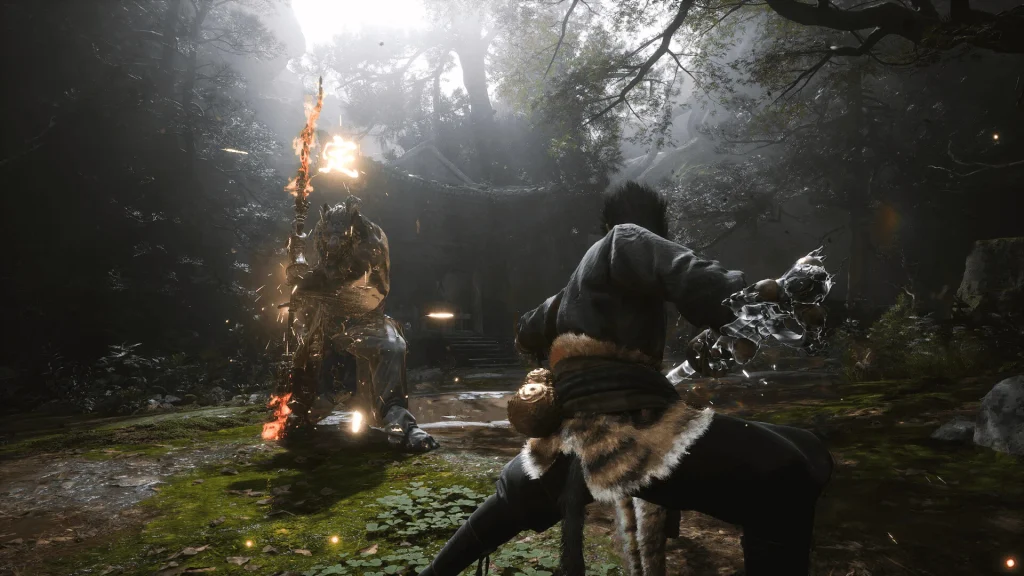
Dodging is also an important part of Wukong’s combat, whereas Onimusha puts more emphasis on its sword-defence mechanics and reaction-based counters. In short, Onimusha rewards mastery of a focused sword system, while Wukong gives players a larger toolbox to experiment with. If you enjoy learning enemy attack patterns and perfecting defensive timing, Onimusha may feel more satisfying. If you prefer experimenting with abilities and different character setups, Wukong offers greater variety.
Do the games have similar boss fights?
Yes. Boss battles are a major part of both games, and this is probably one of the strongest reasons Black Myth: Wukong players may find Onimusha appealing.
Both games use bosses with distinctive attack patterns and movesets that encourage players to observe their behaviour rather than simply attack continuously. Their encounters also place considerable emphasis on presentation, with large supernatural enemies and cinematic sequences helping make major fights feel like set pieces. Reviews of Onimusha have particularly highlighted its demanding boss encounters and timing-focused combat.
The difference is how players approach those encounters. Onimusha generally asks you to rely more heavily on sword defence, parries, deflects, dodges and Issen counters. Wukong gives you more ways to approach a boss through stances, spells, transformations, Spirits and other abilities. Neither game should simply be described as a boss rush, however. Both include regular enemy encounters, exploration and progression between major fights.
Is Onimusha: Way of the Sword a Soulslike?
Not exactly. Onimusha: Way of the Sword has several characteristics that can remind players of Soulslike games, particularly its demanding boss fights, enemy attack patterns and emphasis on learning combat timing. Steam also includes Souls-like among its user-defined tags.
However, it does not follow the traditional Soulslike formula closely enough to make that its defining genre. The game has a clear character-action identity, provides difficulty options and does not use the familiar Souls system in which dying causes you to lose a recoverable resource. Game Informer’s preview also specifically noted that the game does not feature the dangerous exploration and resource-loss structure associated with traditional Soulslikes.
The difficulty system is another important distinction. Players can start with Story or Action, while the harder Carnage mode becomes available after completing the game and is tied to New Game+. A more accurate description is therefore a character-action game with demanding, timing-based sword combat, rather than simply calling it a Soulslike or a pure hack-and-slash game.
Which game offers more exploration and customisation?
Neither game is a traditional open-world game, but Black Myth: Wukong generally offers more room for exploration and experimentation. Its chapters contain broader areas, optional paths and hidden encounters, giving players more reason to investigate areas away from the main route. The game’s official description also emphasises exploring a large mythological world and discovering its hidden stories.
Onimusha: Way of the Sword is more focused in its overall structure. It combines more linear stages with an explorable Kyoto hub area that Capcom has described as an “open-town.” This area provides side paths, secrets and optional content, but it should not be confused with a fully open-world structure.
Progression is also different. Wukong gives players multiple systems to customise, including stances, spells, transformations, Spirits and equipment. Onimusha instead concentrates more heavily on sword skills, defensive techniques, equipment and Oni Armaments. For players who enjoy trying different builds and combat combinations, Wukong is the better fit. For those who prefer a more focused sword system with an emphasis on timing and defence, Onimusha is likely the better choice.
Is Onimusha: Way of the Sword worth playing after Black Myth: Wukong?
Yes, especially if what you enjoyed about Black Myth: Wukong was its cinematic boss encounters, supernatural enemies and demanding melee combat.
Onimusha: Way of the Sword is worth considering if you want a game that puts swordplay, timing, parries and Issen counters closer to the centre of the experience. Its Japanese historical-fantasy setting also provides a different take on Asian mythology. However, it may not be the best choice if your favourite parts of Wukong were its spells, transformations, build variety and broader exploration. Those systems are more prominent in Game Science’s action RPG.
Overall, the two games are similar enough that Wukong fans should feel at home with the general third-person action format, but different enough that Onimusha offers its own identity rather than feeling like a copy. You can check Onimusha: Way of the Sword on Steam for the current price, PC requirements, supported features and the latest player reviews.
Onimusha: Way of the Sword Review
If you want a visual overview before deciding whether the combat and difficulty are right for you, watching a full review can give you a better sense of the game’s swordplay, boss fights and overall pacing.
Onimusha: Way of the Sword Review – Excellent Action With Some Ageing Elements
Frequently asked questions
Is Onimusha: Way of the Sword a sequel to Black Myth: Wukong?
No. Onimusha: Way of the Sword and Black Myth: Wukong are completely separate games. Onimusha is developed and published by Capcom, while Wukong was developed by Game Science. They have different characters, stories, settings and mythological influences.
Is Onimusha: Way of the Sword open world?
No. Onimusha: Way of the Sword is not a traditional open-world game. It combines focused stages with an explorable Kyoto hub area that offers side paths, secrets and optional content. Capcom has described this wider area as an “open-town” rather than an open world.
Is Onimusha harder than Black Myth: Wukong?
The answer depends on the player, but Onimusha can be demanding because its combat relies heavily on precise timing for parries, deflects and Issen counters. It offers Story and Action difficulties, plus the unlockable Carnage mode, so players have more explicit difficulty choices than in Wukong.
Can I play Onimusha without playing the older games?
Yes. Onimusha: Way of the Sword is designed as a new entry and does not require players to complete the older games first. New players can follow Miyamoto Musashi’s story without having prior knowledge of the original PlayStation 2-era Onimusha titles.
Is Onimusha available on PS4?
No. Onimusha: Way of the Sword is available on PS5, but there is no PS4 version. The other launch platforms are Xbox Series X|S, Nintendo Switch 2 and PC.
Should Black Myth: Wukong players buy Onimusha?
Black Myth: Wukong players should consider Onimusha if they enjoy cinematic boss fights, supernatural enemies and precise melee combat. It is particularly appealing if you want deeper sword-defence mechanics. If your favourite Wukong features are spells, transformations and extensive build experimentation, however, Onimusha may feel more restrictive.
Lates Posts